The Navy's Ships Now Update Like Smartphones
Over-the-air patches to radar, sonar, and weapons systems are rewriting how the U.S. fleet generates combat power at sea.
By The Defense Desk
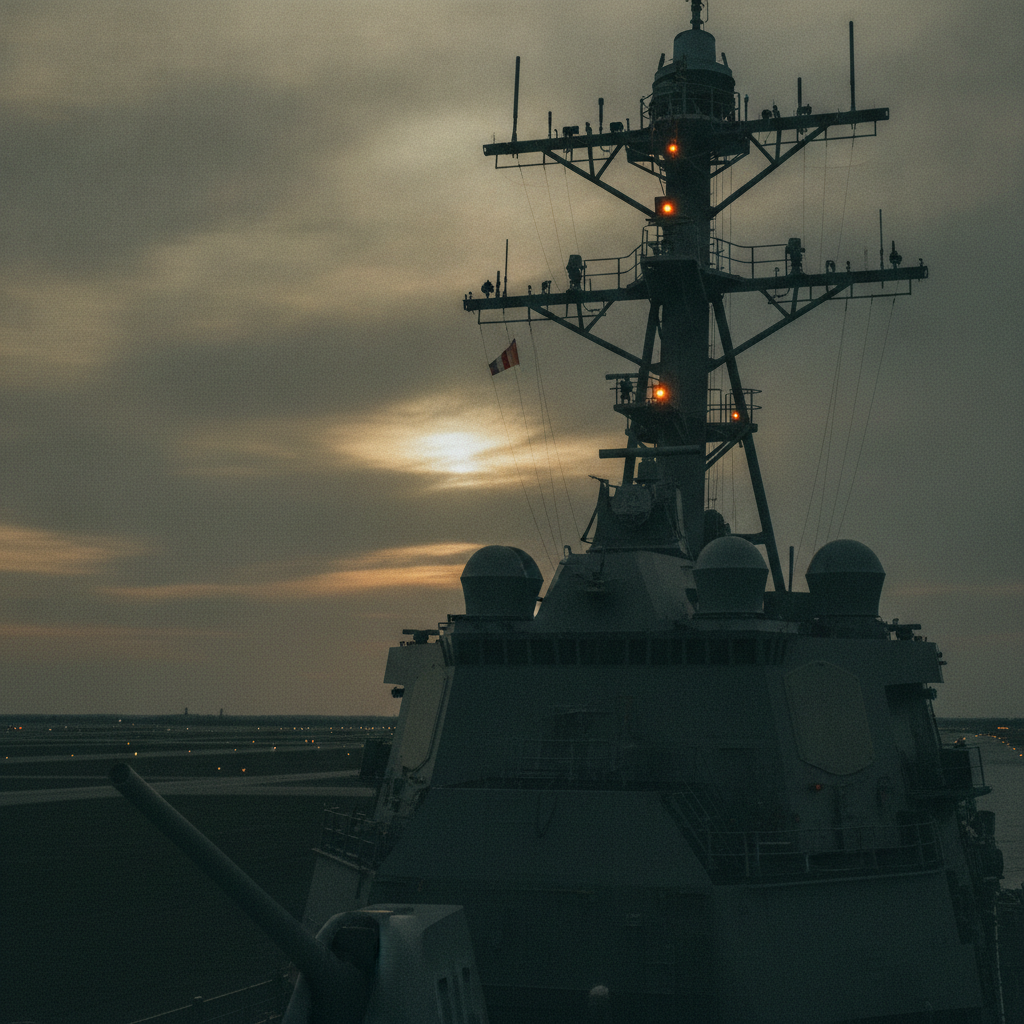
A U.S. warship can now leave port with one software baseline and fight with a better one. The Navy is pushing over-the-air updates to combat systems — radar, sonar, weapons — while ships are underway, collapsing a cycle that once took years into something the source describes as what a phone does overnight — now increasingly possible while underway at sea. [1]
Until recently, this kind of remote delivery was limited to business systems: email, collaboration tools, network utilities. Now it reaches the weapons that define a ship's lethality. An update that once waited for a maintenance availability, a formal test event, and a calendar measured in years can reach the Fleet far faster. [1]
The stakes are clear in recent combat. From Ukraine to the Red Sea, sensors are detected and countered, communications pathways are jammed, and algorithms and tactics are revised. An advantage can disappear in weeks, days, or hours. Hardware still matters, but software compresses the time between observation, adaptation, and renewed effectiveness. [1]
Speed of adaptation has always mattered in warfare. What is new is that software has made it measurable, repeatable, and shippable — turning institutional agility from a virtue into an engineering specification.
The architectural answer is the Adaptable Mission Architecture, or AMA — described by the Navy as both a technical design philosophy and an operational mindset. It connects four areas typically treated as separate initiatives: a common modular open systems approach to computing; common cloud and transport architecture; a software-defined naval force; and the human talent required to integrate them. Published interfaces, automated testing, secure delivery pathways, and constant Fleet feedback make components replaceable without rebuilding the entire mission thread. [1]
Alongside AMA, the Navy's Modern Service Delivery framework applies systems engineering to the delivery system itself. Reusable services, secure defaults, and automated evidence reduce repeated debates over first principles — allowing the Navy, in its own framing, to start on second base. [1]
To accelerate industry alignment, Navy leaders have conducted Demand Signal Forums with industry partners around the nation. Through curated gatherings, this series will feature off-the-record conversations focused on the Navy and Marine Corps' priority problem sets, emerging acquisition pathways, and how private capital and industry can partner more effectively with the recently created DON Rapid Capabilities Office (RCO) and Portfolio Acquisition Executives (PAEs). [1] [2]
Institutional restructuring accompanies the technical shift. Legacy acquisition divided accountability by component — each individual program could succeed while the end-to-end mission thread still failed at the seams. Portfolio accountability, by contrast, makes the seams someone's job. [1]
The hardest part of any modernization effort rarely lives in the engineering. It lives in the org chart, the decision loop, and the culture that either welcomes continuous change or quietly smothers it.
The Navy is explicit about what it wants from industry: modularity over monoliths. A brilliant but closed system is still a stovepipe — doomed to become legacy hardware with a long integration tail. The ask is for severable divestments, published interfaces, and pricing for portability. Friction in integration and interoperability, the Navy says, are disqualifiers. The future force must be built from Lego blocks, not stovepipes. [1]
Software fluency is now being treated as warfighting proficiency, not as a contractor service that can be outsourced or delegated. Programs are now measured by how long it takes to deliver and certify an update, how quickly a component can be replaced, and how often Fleet feedback changes the product — metrics that would have seemed foreign to acquisition offices a decade ago. [1]
Seapower has always depended on range, payload, endurance, and skilled sailors. The Navy is now adding two more variables to that list: update speed and adaptation speed. The ship that can be patched faster than its adversary can be countered is, in a meaningful sense, a different kind of weapon.
The ship may set sail with one software baseline and fight with a better one.James Day and Justin Fanelli