The NRO Just Made RF Intelligence Operational
HawkEye 360 graduates from evaluation to live contract—as its satellites listen for signals across every contested region on the map.
By The space-quantum Desk
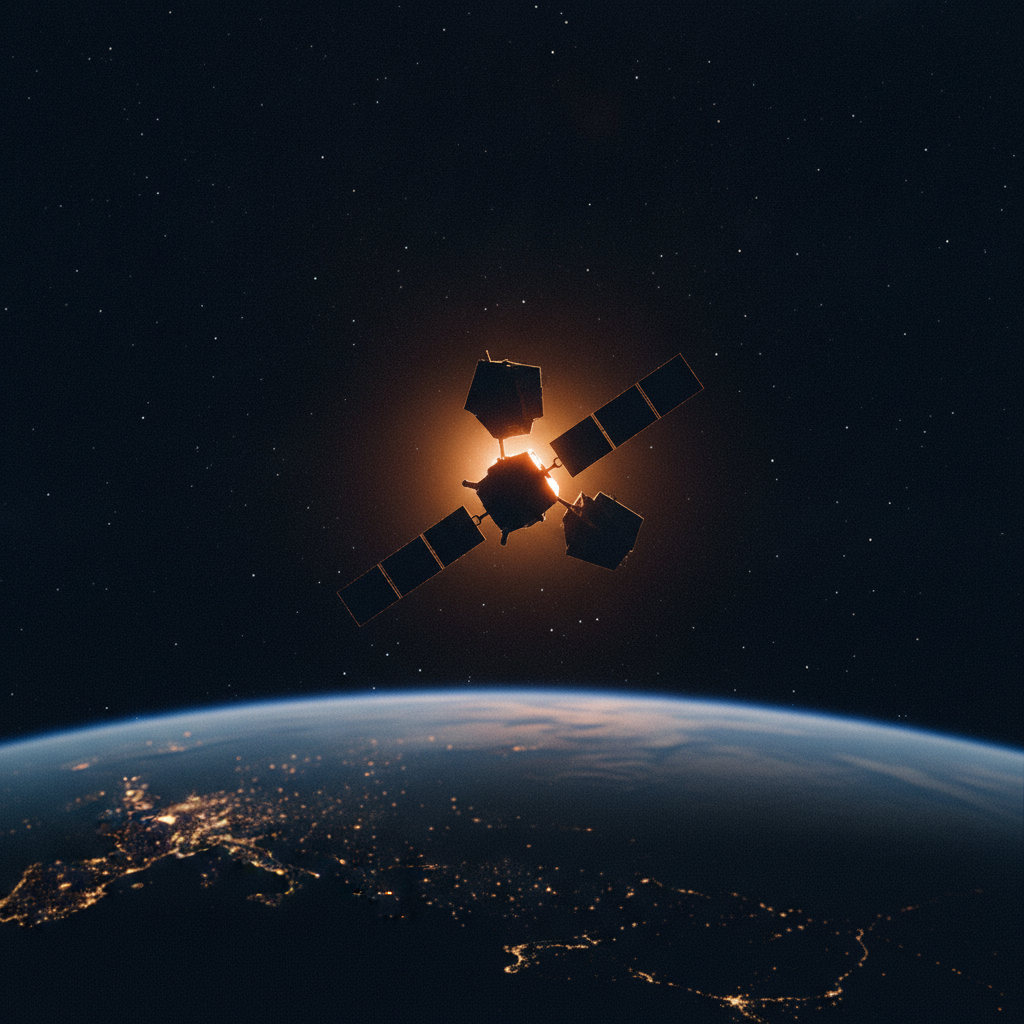
The National Reconnaissance Office has awarded HawkEye 360 a contract to supply commercial radio-frequency intelligence to U.S. intelligence and defense agencies—ending a multiyear evaluation and moving the company into operational status. [1]
The award falls under the NRO's Commercial Radio Frequency Capabilities Augmentation program, which is structured to let the agency scale purchases as mission requirements shift. The program traces back to September 2022, when the NRO issued study contracts to six companies before advancing through modeling, simulation, and on-orbit demonstrations. [1]
Where optical satellites photograph terrain, RF satellites eavesdrop on the electromagnetic spectrum—radars, communications systems, maritime transponders. HawkEye 360's constellation of more than 30 small satellites, flying in three-spacecraft clusters, triangulates a signal's origin by combining measurements across multiple craft in low Earth orbit. [1]
Commercial momentum is already evident. International revenue hit a record $21 million in the second quarter, up 134% from $9 million a year earlier, and the company has disclosed more than $100 million in recent international awards—including a European electronic-warfare program and a multiyear contract supporting the Indian Navy. [1]
The quiet shift from evaluation to contract signals something larger: governments are no longer treating commercial space intelligence as a supplement. It is becoming the architecture.
On the technical roadmap, HawkEye 360 is targeting roughly 10-minute revisit and latency within two to three years, using a mix of additional satellites and hosted payloads to close that gap. [1]
The NRO's CRFCA vehicle is also scoped for civil and humanitarian missions—meaning the same orbital ears monitoring electronic warfare in the Indo-Pacific could one day route disaster-response coordination on the ground. [1]
The growth reflects broader military demand for space-based RF intelligence amid conflicts and security concerns in Europe, the Middle East and Indo-Pacific.Sandra Erwin