The Pentagon's Five-Second War
A new Defense Innovation Unit program wants AI to read the sky faster than any human can—and act on what it sees.
By The Defense Desk
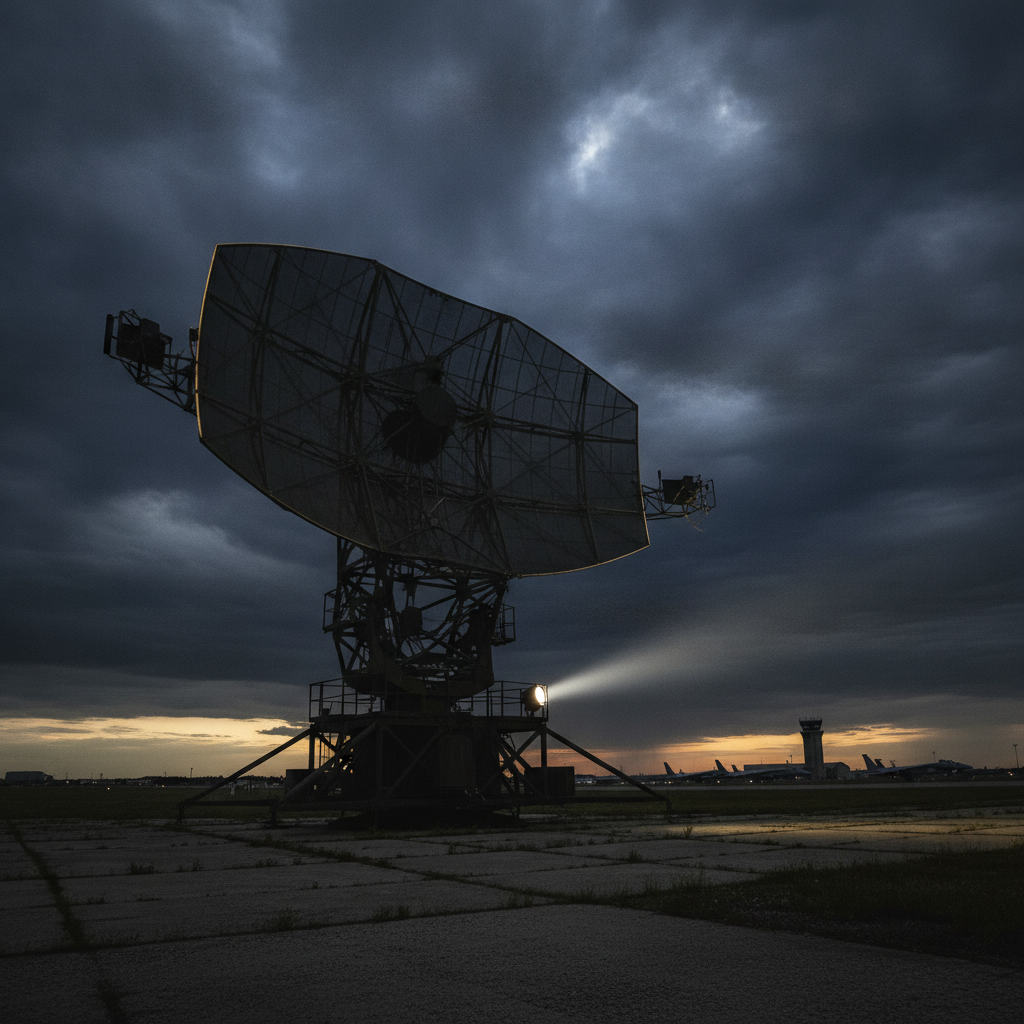
A missile is in the air. Radar returns are fragmented. Three tracks look like one object, or maybe four. The operator has seconds. This is the problem the Pentagon has been trying to solve since air defense was invented—and it is now placing a very specific bet on artificial intelligence to crack it. [1]
The Defense Innovation Unit has issued a solicitation for what it calls the "Space Threat Intelligence Synthesis Engine"—a software system designed to fuse live video, satellite imagery, radar feeds, geospatial data, and classified intelligence reports into a single, continuously updated picture of missile and space threats. [1] The solicitation is due September 24. The target: a latency of no more than five seconds between incoming data and displayed results, with a preference for two seconds or less. [1]
That two-second threshold is not an abstraction. When interceptors are scarce and objects are moving at hypersonic speeds, the difference between a two-second and a ten-second lag is the difference between a decision and a regret. The DIU is explicit on the stakes: "Existing tools struggle to distinguish closely spaced objects, track emerging threats, and keep threat models current." [1]
What makes this solicitation unusual is not the ambition—defense programs have long promised intelligence fusion at machine speed—but the specificity of the failure it is trying to fix. The problem is named, measured, and made concrete in ways that suggest the Pentagon has been burned by vagueness before.
The solicitation describes a system that must handle throughput of 20 to 30 megabytes per minute under normal conditions, with bursts of up to five gigabytes. [1] It must produce "actionable, confidence-scored alerts supporting analyst-in-the-loop, human-on-the-loop, or automated workflows"—depending on how much autonomy commanders choose to grant it. [1]
The phrase "analyst-in-the-loop" versus "human-on-the-loop" is doing a lot of quiet work in that document. [1] The first means a person reviews and approves each output. The second means a person can intervene but does not have to. Both options exist in the solicitation—alongside the third option, fully automated workflows—and the fact that all three are listed reflects the range of operational contexts the system is expected to serve.
This is the central tension in modern air defense: the faster the threat, the less time there is for human judgment. Every second shaved from the sensor-to-decision loop is also a second subtracted from deliberation. What gets automated, and by whom, and under what rules, are questions that no software solicitation can fully answer.
The operational pressure behind the solicitation is not hypothetical. As skies fill with missiles and drones in conflicts like the ones with Ukraine and Iran, AI is increasingly being seen as an indispensable partner to overworked human operators. [1] At the same time, interceptors like the Patriot air-defense system remain expensive and in perpetual short supply, forcing operators to make fast, consequential choices about where to spend them. [1] Every misidentified track is a wasted shot. Every delayed decision is a gap in coverage.
Industry is already moving to fill the gap. Northrop Grumman announced in July a partnership with AI firm Camgian to incorporate artificial intelligence into integrated air and missile defense systems. [1] BAE and Scale AI have also teamed up for AI-enhanced missile defense. [1] The DIU solicitation opens the field further, inviting proposals from any contractor that can meet the latency, throughput, and accuracy benchmarks.
What the solicitation describes, technically, is a cross-domain fusion engine: a system that ingests heterogeneous data streams, correlates them in real time, and surfaces patterns that no single sensor and no single analyst could find alone. The DIU framing is direct about the ambition: "By automating advanced cross-data correlation, the architecture aims to uncover hidden patterns, complex operational relationships, and predictive threat behaviors far beyond the capabilities of human analysis alone." [1] The output would include both human-readable visualizations for frontline operators and machine-to-machine APIs for automated C2 workflows. [1]
That dual output—one surface for humans, one for machines—reflects something larger than a design choice. It is an acknowledgment that future air defense will not be a human operation with AI support, but a hybrid system in which authority, attention, and reaction time are distributed across both.
The open-source goal is worth pausing on. Defense AI programs often disappear into classified contracts and proprietary stacks, making it difficult for independent researchers or allied nations to audit, extend, or interoperate with the results. An open architecture does not guarantee transparency, but it lowers the barrier to integration—and in a coalition environment, where interoperability between allied air defense networks is a persistent headache, that matters. [1]
The confidence-scoring requirement is similarly pointed. Rather than returning a binary threat or no-threat determination, the system must quantify its own uncertainty—giving operators a number, not just a verdict. [1] In practice this means a commander might see "87% probability, hostile ballistic missile, bearing 214, closing at Mach 5" rather than simply "threat detected." Whether operators trust those scores, and how they calibrate that trust under pressure, is a human factors problem the software cannot solve on its own.
Confidence scores are only useful if the people reading them understand what confidence means in a machine's terms. Training for that kind of literacy—teaching operators to reason probabilistically at speed, under fire—is a challenge that sits entirely outside the scope of a software solicitation.
The September 24 deadline for proposals gives contractors little time to assemble responses, which suggests the DIU already has a shortlist in mind or is moving to rapid prototyping. [1] The combination of strict latency targets, open-source goals, and multi-mode output specifications reads less like an open exploration and more like a performance standard written around a desired capability the program office already knows is achievable—just not yet integrated.
If the Space Threat Intelligence Synthesis Engine works as specified, it will not replace the operator standing in front of a threat display. [1] It will change what that operator sees, how fast they see it, and what confidence they can place in what the machine tells them. That is a narrower claim than "AI wins the war"—and for that reason, it is probably the more important one.
By automating advanced cross-data correlation, the architecture aims to uncover hidden patterns, complex operational relationships, and predictive threat behaviors far beyond the capabilities of human analysis alone.Defense Innovation Unit solicitation