The Refinery Surge Nobody Asked For
Global oil refining capacity is set to jump 4.2 million barrels per day by 2030. The glut could hit margins hard—and reshape trade.
By The energy-climate Desk
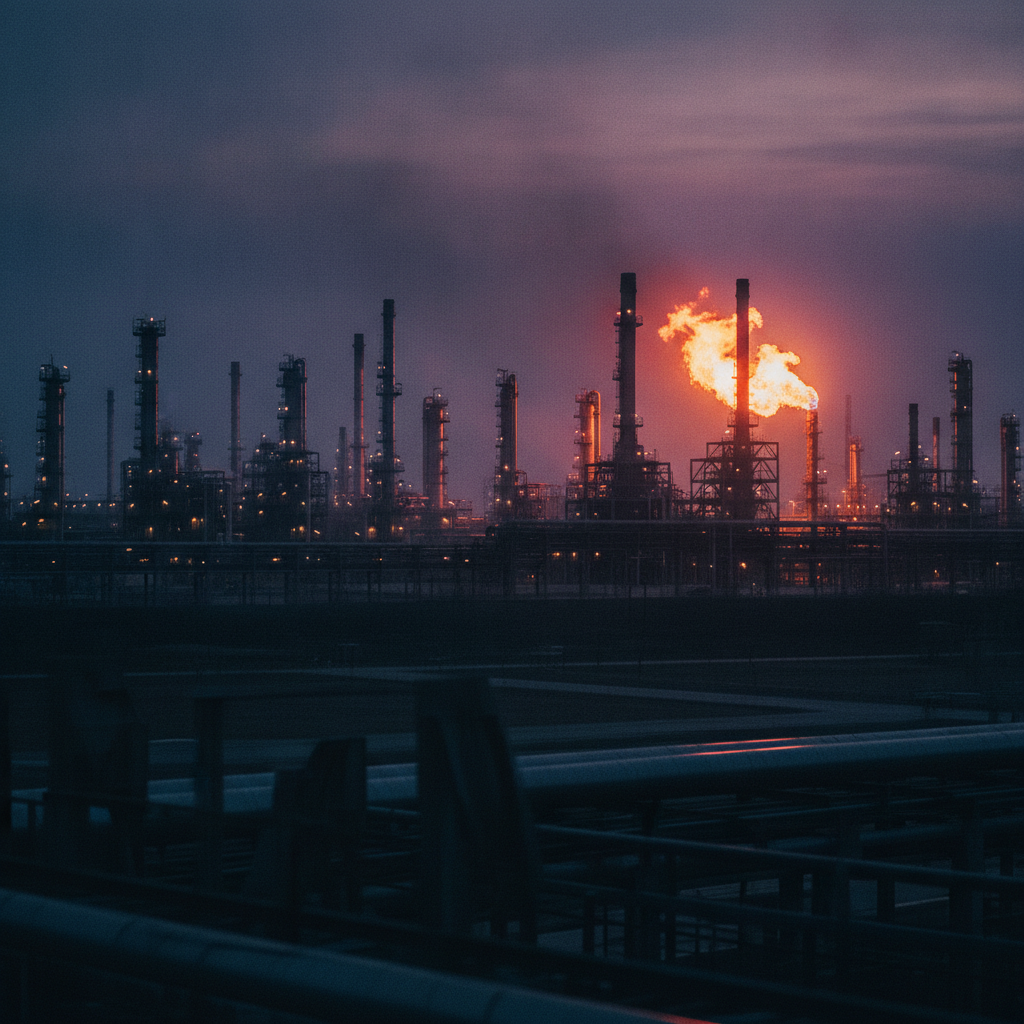
The world is about to build a lot more oil refining capacity than it needs. BloombergNEF projects a net increase of 4.2 million barrels per day from 2026 through 2030—up 162% from the preceding five years—a figure that sits well above projected growth in refined product demand. [1] If that pipeline fully materialises, margins will compress and the weakest assets will face an existential squeeze.
The geographic story is almost entirely a South and East story. Africa and Asia Pacific together account for roughly 95% of global net capacity growth through 2030, driven by stronger demand outlooks, import-substitution strategies, and investment in export-oriented and petrochemical-integrated assets.
Near-term conviction is high. [1] That changes as the decade progresses: the 2028–2030 cohort sits at earlier development stages, raising the risk of delays and outright cancellations.
A capacity overhang is rarely just an industry accounting problem. When too much throughput chases too little demand, the pressure distributes unevenly—punishing the oldest, least-integrated facilities first, rewarding those positioned closest to growing markets.
China's position is particularly exposed. The country faces a supply overhang that may lead to further consolidation among smaller, independent assets—sometimes called teapot refiners—as the majors absorb or displace them. [1] India and Africa, by contrast, are adding capacity for greater self-sufficiency.
A geopolitical variable has entered the picture. [1] BNEF sees limited impact on the medium-term capacity pipeline so far, but notes that the conflict strengthens the case for resilience investment in storage, pipelines, and logistics.
That logic—build buffers, not just barrels—marks a quiet but meaningful shift in how energy planners think about infrastructure. Throughput capacity alone no longer defines security; the ability to store, reroute, and absorb shocks increasingly does.
The capacity overhang scenario is not guaranteed. [1] But the further out you look, the thinner the foundation—project pipelines at earlier stages are historically prone to slippage, financing gaps, and policy reversals, particularly in markets where demand trajectories are debated.
The map of global refining is being redrawn not by a single force but by the compounding of several: demand gravity shifting south and east, older industrial economies contracting their footprint, and conflict adding logistics complexity to an already stressed supply chain.
For now, the industry's central problem is not scarcity but its opposite. Too much capacity in the wrong places, arriving at a moment when the energy transition is already nibbling at long-run product demand. Whether that resolves through orderly rationalisation or a wave of distressed closures will depend on how many of those 2028–2030 projects actually break ground—and whether the geopolitical shocks keep piling up. [1]
If all projects materialize, a capacity overhang could intensify competition and weigh on utilization and margins, particularly for less-competitive assets.BloombergNEF