The Robot Race Will Be Won in the Patent Office
In physical AI, the most valuable invention may not be the robot itself—it's the behavior that makes it work.
By The Robotics Desk
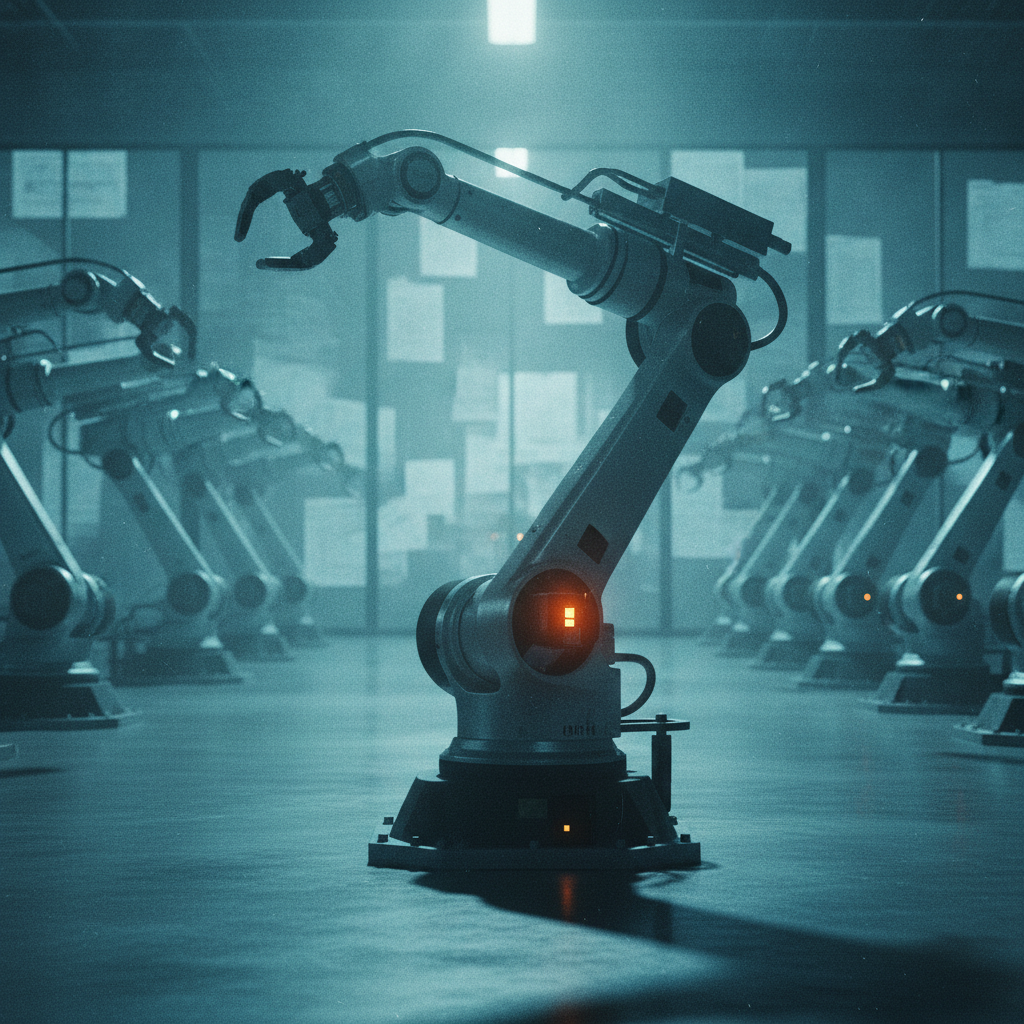
Boston Dynamics sued Ghost Robotics in 2022 over 'core technology' that dictated how a robot recovered if it fell over—not the chassis, not the actuators, but the behavior [1]. That distinction is now the central tension in physical AI intellectual property.
As competition in robotics intensifies, the physical AI race is becoming less likely to be won by whoever builds the best robot, and more likely to be won by whoever owns the technology that determines its behavior [1]. The IP landscape spans hardware, software, AI models, and calibration methods—and the most valuable invention may not be the robot itself, but the technology that enables it to behave in a particular way [1].
Swarm robotics sharpens the problem further. The technical innovation is often an interaction between dozens of machines that produces behavior no individual machine could achieve alone [1].
For startups, the economics are punishing. A single European application runs €13,000 to €18,000 or more once attorney fees are included [1]. AI-assisted drafting can cut filing time by up to 70%, shifting attorney effort toward judgment rather than documentation [1]. London-based food-assembly robotics startup KAIKAKU took a focused approach: rather than patenting every component, it identified the core motion mechanism that moved bowls at speed without making a mess—its 'crown jewel' patent [1].
The lesson isn't to file more—it's to file what matters, and to decide what should never be published at all.
As RoboSense's IP head warned last year, patent disputes in robotics are likely to multiply as they did in the smartphone industry in the 2010s [1]. In a sector moving this fast, a strong IP strategy must be deployed from the outset—it can't be something you get to after the Series A [1].
The startups that lose out are the ones that delay.Dominic Davies