The Royal Navy's New Battle for the Atlantic
Britain's First Sea Lord says Russia's submarine threat demands a hybrid fleet of drones and warships—and a nation that remembers the sea.
By The Defense Desk
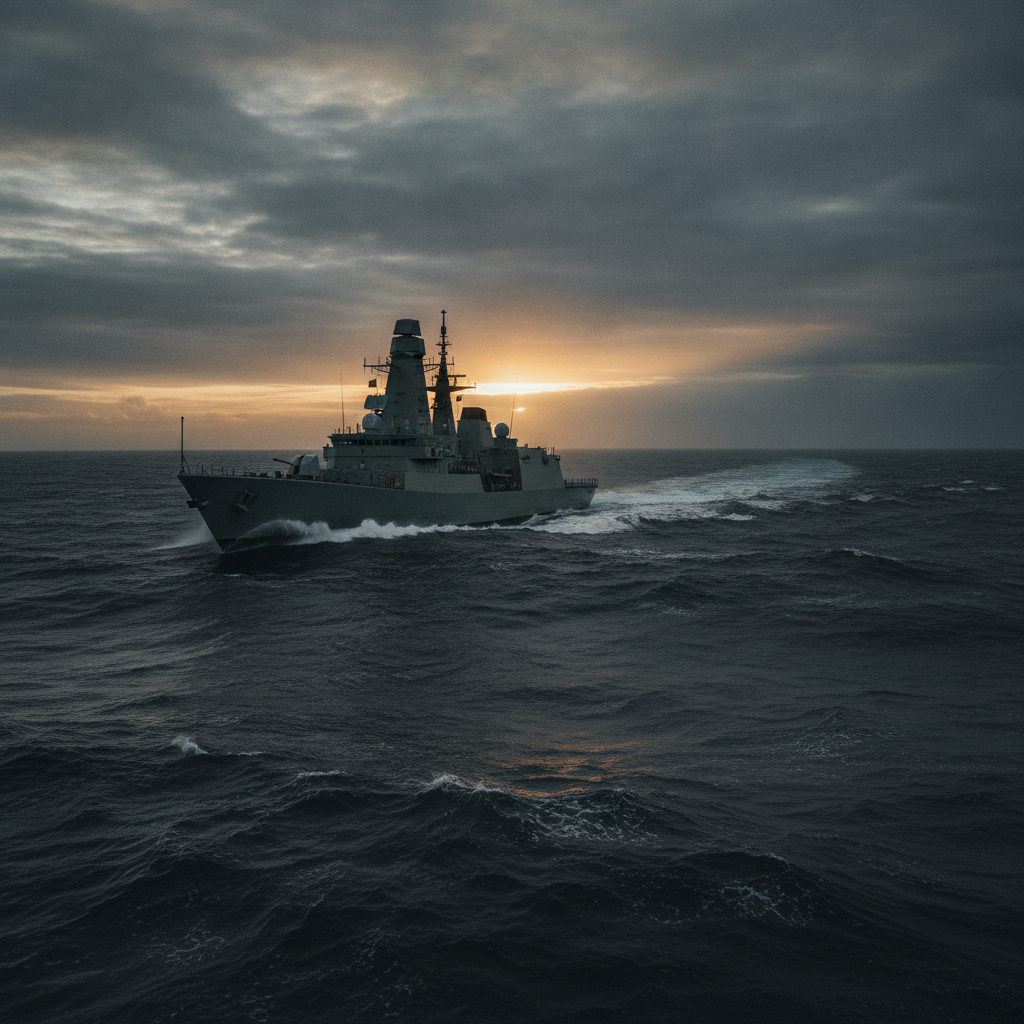
[1][2]
Jenkins invoked Churchill's memoirs to frame the stakes, noting that Britain's ability to "carry on the war, or even keep ourselves alive," rested fundamentally "on our mastery of the ocean routes and the free approach and entry to our ports." That calculus, he argued, has not changed—only deepened. Almost all UK trade moves by sea, while almost all energy, food, raw materials and exports flow through maritime routes; undersea cables carry almost all data, transactions and communications on which modern life depends. [2]
Russia, Jenkins said, retains advanced submarines that are increasingly difficult to track, long-range precision weapons and specialist deep-water systems. The Royal Navy is already deploying two British warships every week on average to monitor Russian vessels. [1]
"It is no longer possible to defend a vast, contested ocean with crewed warships alone," he said.
What makes the speech notable is not the hardware—it is the argument about visibility. A society that cannot see its own dependence on the sea is poorly positioned to defend it.
Jenkins named a "dangerous paradox": the Atlantic has arguably never mattered more to Britain, yet it has become increasingly invisible in the public's mind. [2] That gap between strategic reality and public awareness, as much as any submarine gap, is what the First Sea Lord is trying to close.
A ship operating alone is now vulnerable. But a ship commanding a network of large uncrewed escorts, drones and autonomous sensors, that is a different proposition.General Sir Gwyn Jenkins