The Tattoo That Disappears Until You Need It
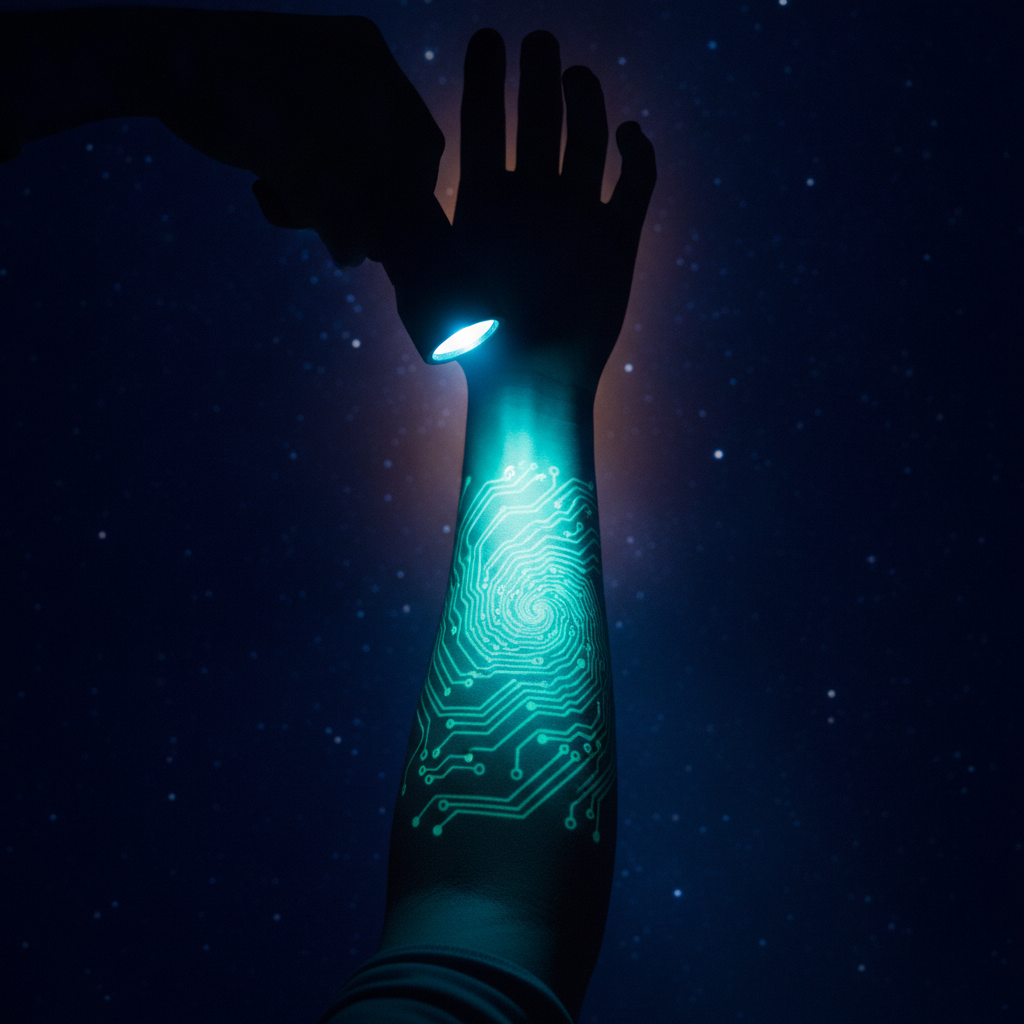
PhotoTat inks stay invisible to the naked eye—until UV light hits them. The implications stretch far beyond body art.
By The space-quantum Desk
[1][2]
[1][2] Mixing primary-colored dyes produces full-color images. Exposure to a bright LED can switch them off faster than waiting for natural fade. [2]
The clinical case is concrete: cancer patients undergoing radiation therapy must receive small tattoos so doctors can guide the beams. [1][2] Those marks are permanent reminders of a difficult chapter. PhotoTat could make them visible only in the clinic, invisible everywhere else. [1][2]
The skin has always been a surface for identity, memory, and now, apparently, programmable information. What changes when the message can be hidden until the right light arrives?
The next step: getting it out of the lab.