The U.S. Arctic Force That Trains to Thrive at -40°F
From freeze-proof latrines to FPV drones, the Army is rebuilding its cold-weather toolkit for a contested far north.
By The Defense Desk
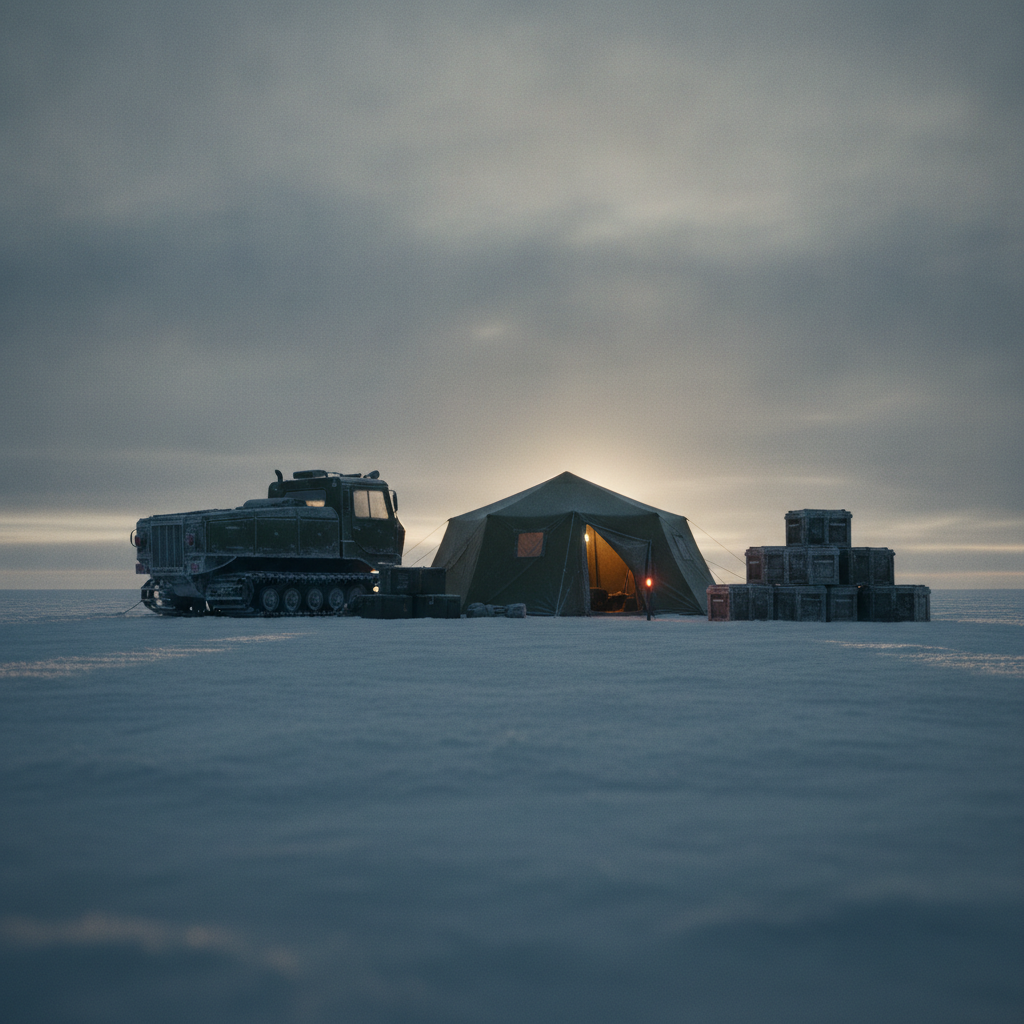
At -40°F, batteries die, fuel freezes, and vehicles sink into ice — and that is before a soldier fires a single shot. For the U.S. Army's 11th Airborne Division, those are not edge cases; they are the baseline [2].
Maj. Gen. John Cogbill, commanding general of the Arctic Angels, puts it plainly: "We have a saying that everything breaks at 40 below" [2]. His division is the Pentagon's only Arctic division, nested at the convergence of U.S. Pacific Command, U.S. Northern Command, and U.S. European Command. Cogbill notes that "We can range any of these locations and be within 90% of the industrial world within nine hours," and separately describes Alaska as "a power projection platform in any of those directions" [2].
Behind the frontline, a parallel engineering effort is quietly expanding what is possible. Testing ran inside CRREL's 288-square-foot Extreme Cold Chamber in New Hampshire, which can reach -90°F, sparing researchers a wait for Alaskan winter peaks [1].
The Arctic is forcing a reckoning with every assumption embedded in standard military kit — from digital sensors to drainage pipes. What works elsewhere simply doesn't.
As CRREL's Dr. Dan Tague noted, "having these facilities operational is important for their physical and mental health while serving in the Arctic and other high-north environments" [1]. Comfort and combat power, it turns out, are the same supply chain.