Trump's Bombardier Ban Threat Has a Military Problem
The U.S. Army has already sold off its old ISR fleet to make room for a Bombardier-built replacement. Now that bet looks exposed.
By The Defense Desk
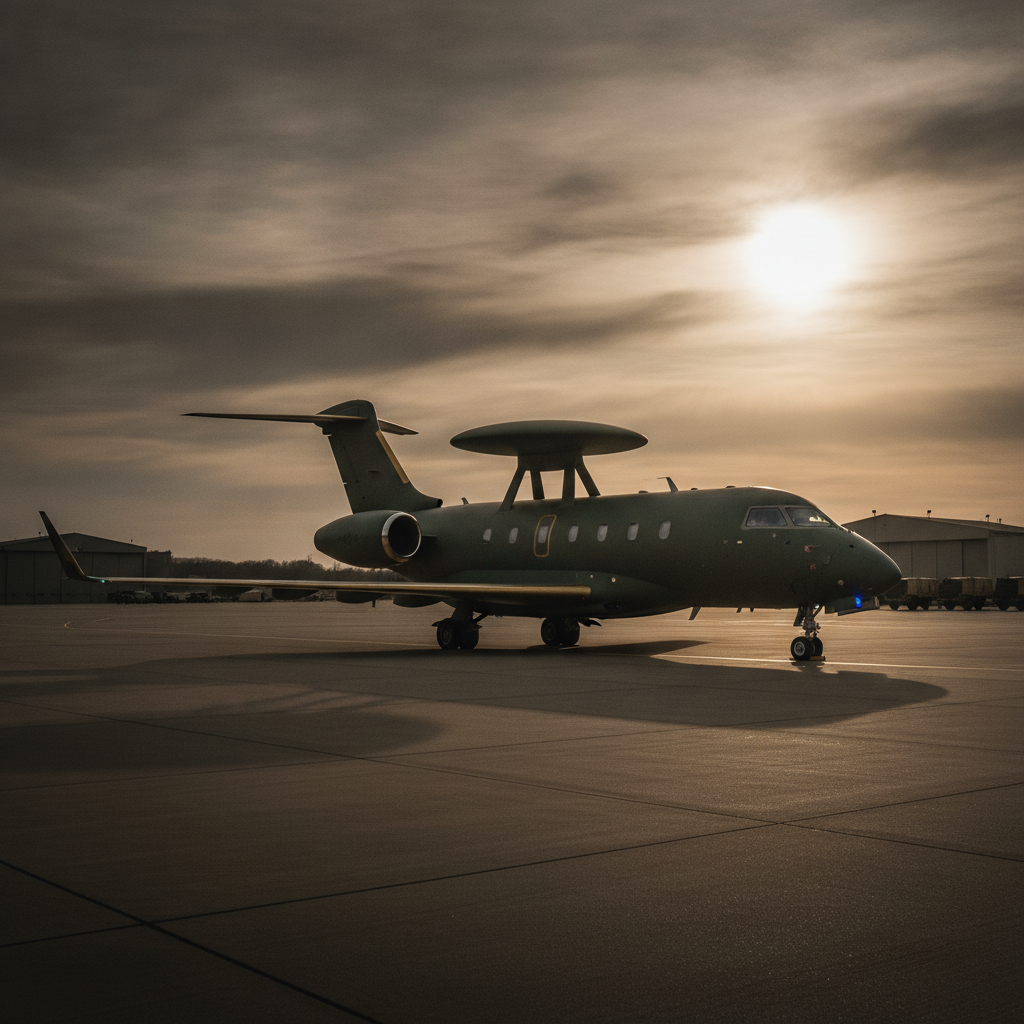
President Donald Trump's call to ban U.S. sales of Bombardier aircraft — "NO MORE SELLING BOMBARDIER IN THE UNITED STATES!" he wrote on Truth Social — has created an awkward problem: the U.S. Army has already bet its entire aerial surveillance future on a Bombardier platform. [1]
The Army is acquiring a fleet of Global Express 6500-based ISR jets, designated ME-11Bs, under its High Accuracy Detection and Exploitation System (HADES) program — and has already divested all of its older turboprop-powered ISR aircraft as part of that transition. [1]
The U.S. Air Force also operates E-11A Battlefield Airborne Communications Node jets from the same Bombardier family, though those are set to retire in Fiscal Year 2028 and be replaced by space-based communications capabilities — assuming Congress doesn't intervene. [1]
Trump's threat stems from a trade certification dispute: back in January, he threatened to decertify and impose a 50% tariff on Canadian-built aircraft, accusing the country of "wrongfully, illegally and steadfastly" not certifying the Gulfstream G500, G600, G700 and G800. [2] Canada's demand for additional fuel system icing testing on the G700 and G800 has been cited as a central factor in the delay. [1]
The White House has indicated in-service military aircraft would be exempted from any decertification action, but declined to clarify whether further exemptions would be made for future U.S. military acquisitions. [1] Bombardier's stock fell roughly seven percent after Trump's post, though it has since partially recovered. [1]
Trade disputes rarely stay contained. When the instrument of leverage is also embedded in a nation's own defense architecture, the blowback becomes harder to calibrate.
Senator Jerry Moran, a Kansas Republican, has already pushed back, noting that the presence of Bombardier in Wichita supports a local workforce of more than a thousand employees. [1] The Army, meanwhile, has no obvious fallback platform — it sold the old fleet to fund the one it may no longer be allowed to buy.