Turkey's NATO Moment Arrives in Ankara
Hosting the July summit, Ankara is betting its defense industry and diplomatic reach will cement its standing inside an alliance in flux.
By The Defense Desk
The 7–8 July NATO summit convenes in Ankara at a moment of acute institutional stress: Russia's invasion of Ukraine is in its fifth year, the Middle East remains at war, and the United States is restructuring its military footprint across Europe [1]. Turkey, as host, is not a passive stage-setter. Ankara is treating the gathering as a formal audition for a larger role inside the alliance.
Defense Minister Yaşar Güler described the summit as a critical turning point where NATO will demonstrate its determination to adapt to the changing security environment and where its future strategic direction will be shaped [1]. At the top of Ankara's wish list: a reaffirmation of Article 5 collective defense commitments from every national leader in the room.
Turkey's pitch rests on three pillars. First, raw military scale — Megan Elizabeth Gisclon, managing editor and researcher at the Istanbul Policy Center, notes that the size of Turkey's military and the government's diplomatic ties with Middle Eastern nations as well as Russia make for a well rounded contribution to NATO [1]. Second, geographic position: sitting at the junction of Europe, the Middle East, and Central Asia, Ankara holds corridors that no alliance map can ignore. Third, a defense industry that has matured fast enough to generate real export leverage.
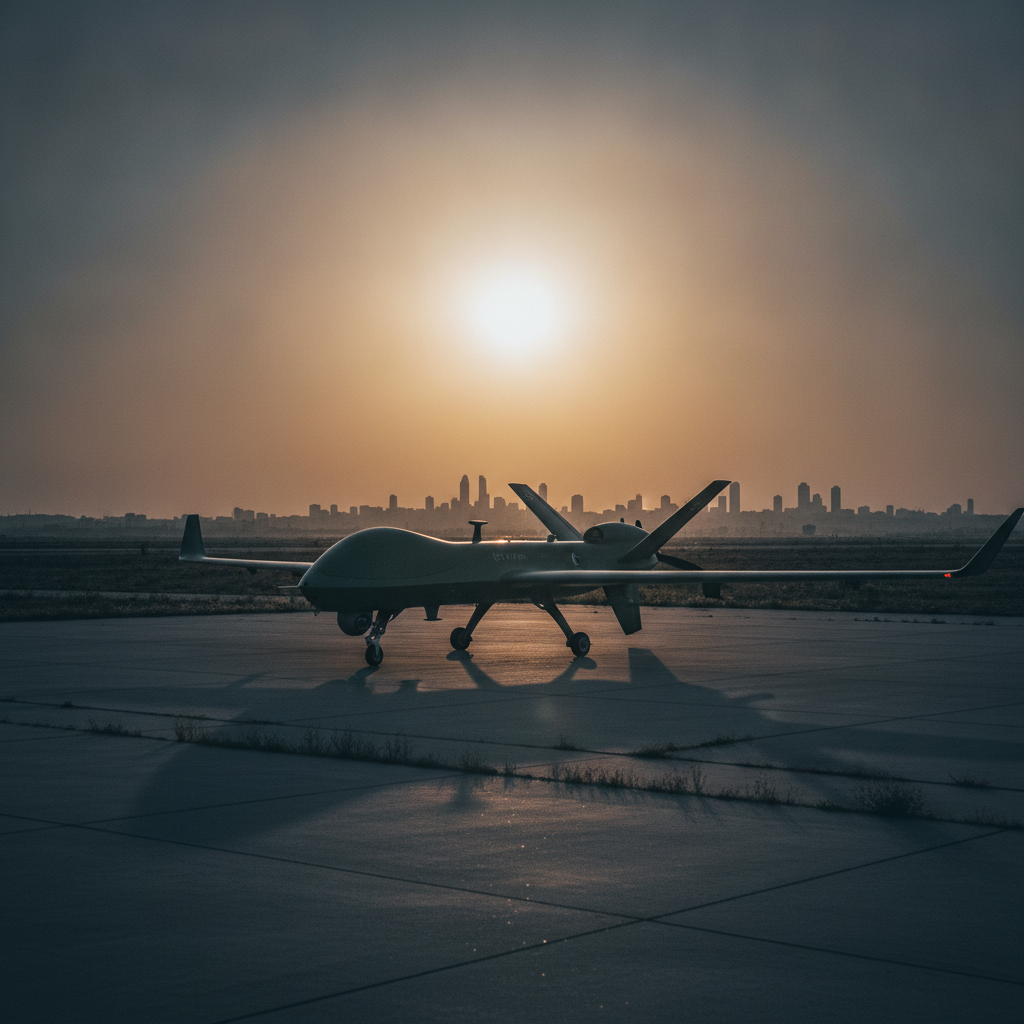
That industrial card gets its own stage in Ankara. A Defence Industry Forum runs alongside the summit itself, and Güler has been explicit about its purpose: "We believe that the Defence Industry Forum, which will be held as part of the NATO Summit in Ankara, will make an important contribution to enhancing defense industrial cooperation among allies" [1]. Serhat Süha Çubukçuoğlu, a senior fellow at the Abu Dhabi-based TRENDS Research and Advisory consultancy, agrees the sector is adding real weight — but flags a structural ceiling.
That ceiling is political. Çubukçuoğlu warns that this newfound clout risks running into political obstacles inherent in NATO's relationship with the European Union [1]. He captures the dynamic in a single passage: "With the vacuum created by increasingly isolationist U.S. policies, NATO is gradually taking on a more distinctly European character. As illustrated by Turkey's effective exclusion from the SAFE program despite being a NATO ally, the obstacles created by Greek and Cypriot vetoes clearly demonstrate this reality" [1]. The contradiction is hard to paper over. Ankara contributes soldiers, drones, and diplomatic bandwidth to the alliance while being sidelined from the bloc's new spending pools.
The tension is not unique to Turkey — it belongs to the broader story of an alliance caught between its founding logic and the institutional gravity of a deepening European defense project. Two memberships, NATO and EU, that were once assumed to pull in the same direction now occasionally pull apart.
Ankara acknowledges that the United States' military restructuring in Europe requires European allies to increase their investment and fill the gaps [1]. That framing suits Turkey: every dollar of European rearmament is an argument for including a defense-industrial partner that sits outside the EU but inside the alliance perimeter. The Ankara summit is, in part, a lobbying exercise dressed as a host's welcome.
Güler put Turkey's self-assessment plainly: "With its strong military, advanced defense industry, effective diplomacy and strategic vision, Turkey will continue to be a key actor in NATO, Euro-Atlantic security and regional stability" [1]. The claim is defensible on its merits. Whether allied capitals — particularly those inside the EU — are willing to convert that acknowledgment into institutional access is the open question the summit will not fully resolve.
Strategic relevance and institutional inclusion are different things. An ally can be indispensable on a map and marginal in a budget committee. Turkey's challenge this week is to narrow that distance — on home turf, with the cameras on.
The Ankara summit hands Turkey a podium and a deadline. If the Defence Industry Forum produces concrete cooperation agreements, and if Article 5 language holds firm in the closing communiqué, Ankara will leave with evidence to match its ambitions. If the EU-NATO fault line widens instead, the summit risks becoming a showcase of exactly the asymmetry Turkey came to fix.