Twenty-Six Defense Puts Fighter-Pilot AR on Infantry Heads
Rebranded from Elbit's US arm, Twenty-Six Defense debuts Primex at AUSA — a night-vision AR headset built on already-fielded Army hardware.
By The Defense Desk
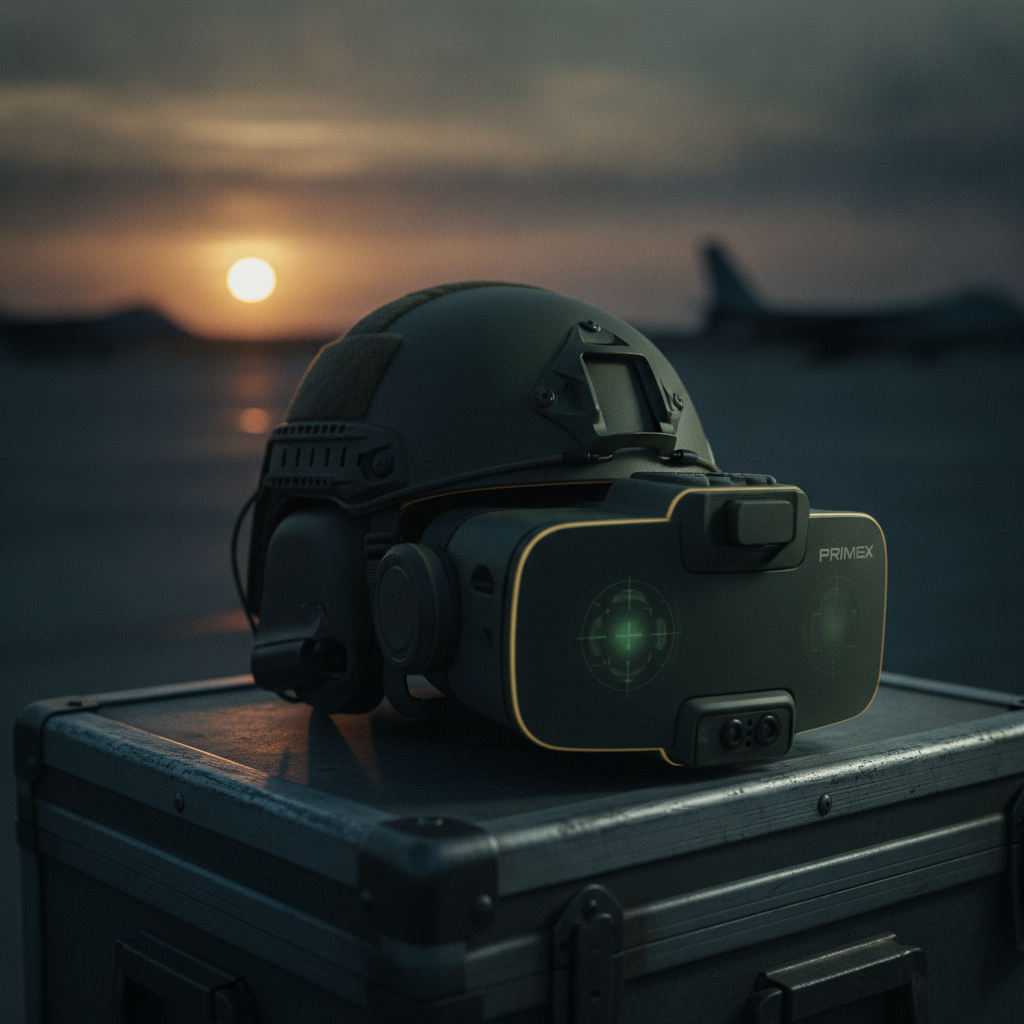
At this year's AUSA expo, a Texas-based defense firm stepped onto the floor under a new name and with new hardware on the table. Twenty-Six Defense — formerly Elbit Systems' American subsidiary — debuted Primex, a soldier-worn augmented reality headset designed to fuse thermal imaging, low-light sensing, and real-time processing into a single, infantry-ready package. [1]
The pitch is tight: Primex delivers what Twenty-Six Defense calls 'ultra-low-latency digital perception,' pulling together low-light sensors, thermal imagery, and real-time processing so soldiers can read and react to their environment even in degraded visual conditions. [2] The company says the system was engineered for sustained operational use, with 'the lightest head-borne load and near-neutral center of gravity' — weight and balance being perennial pain points in head-worn military kit. [1]
What Twenty-Six Defense is most insistent about is the system's pedigree. Rather than prototyping around speculative components, Primex draws on mature technologies from digital night vision and soldier-worn systems already fielded by the U.S. Army. [2] The company already produces the AN/PSQ-44 Enhanced Night Vision Goggles, which contain features that allow for rapid target acquisition and augment reality to enhance visual clarity. [1] High technology readiness level maturity, the company argues, reduces technical uncertainty and accelerates deployment. [2]
The ambition goes beyond better night vision. Ernie Basic, Twenty-Six Defense's senior director of research and development, said the technology combines fighter-pilot displays with night-vision systems, so soldiers get 'the full operational picture.' [1]
The system is also designed to grow. Primex uses a modular hardware and software architecture that supports integration with multiple sensors, data sources, and mission command systems — meaning configurations can evolve without a complete redesign. [1]
Soldiers have long carried the cognitive cost of operating in environments that offer too much noise and too little clarity. The question the industry keeps returning to is whether the weight of new perception tools — literal and mental — cancels out their benefit. Primex is a direct answer to that tension: strip the load, keep the picture.
Primex wasn't the only thing Twenty-Six Defense brought to AUSA. The company also showcased the XM1168 mobile 120mm mortar system, the Autonomous Relocatable Surveillance Tower, and the SkyStriker Block 4E — a broad spread suggesting a company intent on establishing its new identity across multiple capability areas, not just wearables. [1]
A rebrand is never just cosmetic. It signals where a company believes the market is moving and what story it wants to tell buyers. For Twenty-Six Defense, Primex is the clearest statement of that intent — a product that sits at the intersection of perception, ergonomics, and deployable software, rather than any single hardware category.
Whether Primex earns a place in Army procurement beyond the Soldier Borne Mission Command pipeline remains to be seen. But the company's bet — that soldiers need less weight on their heads and more data in their eyes — is one the Pentagon's wearable programs have been inching toward for years. Twenty-Six Defense is simply claiming it got there first, with fielded parts to prove it. [1][2]