Wet T-Shirts Are Cooling the Army's Starlink Gear
At Project Convergence Capstone 6, soldiers in the Mojave found a low-tech fix for a high-tech problem—and the Army is taking notes.
By The Defense Desk
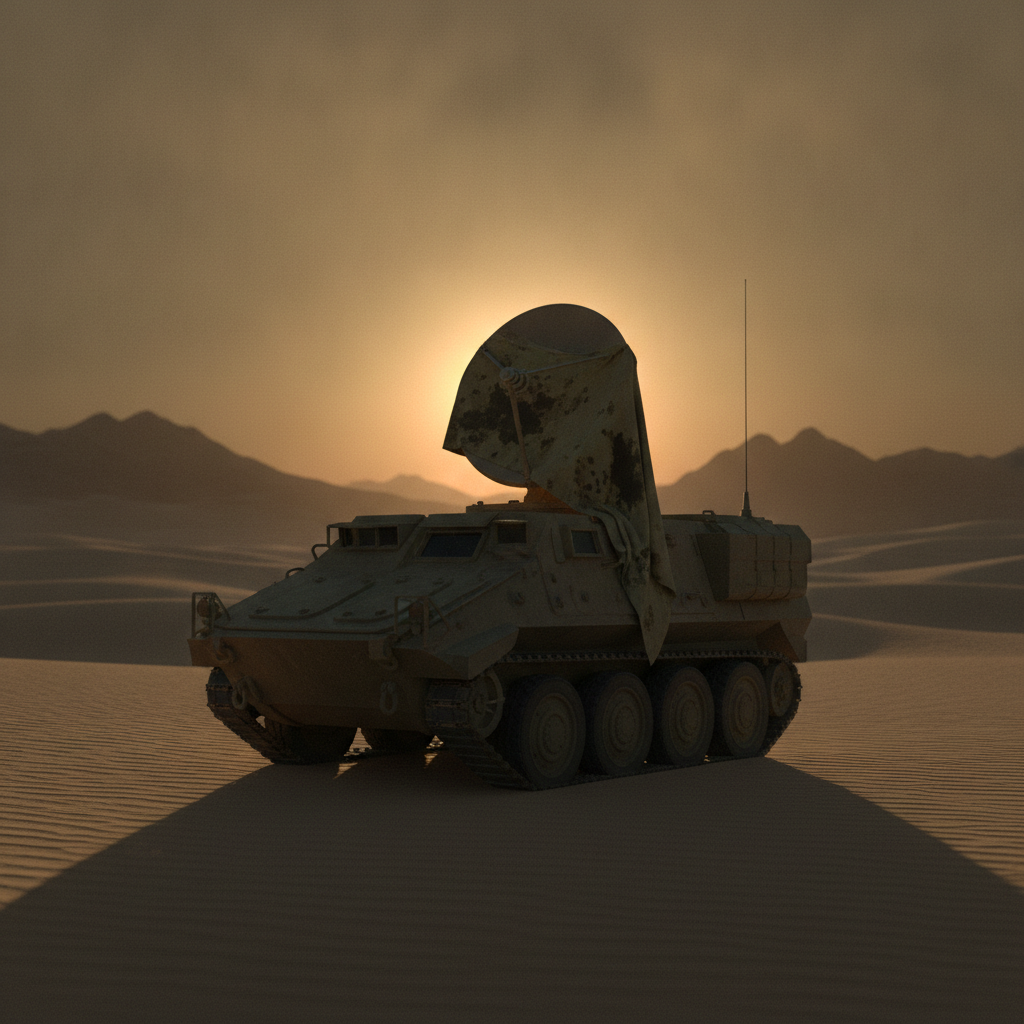
When Starlink terminals began overheating in 100-plus degree Mojave Desert heat during Project Convergence Capstone 6 at Fort Irwin, soldiers had no contractor support to call. So they soaked T-shirts in ice water and draped them over the antennas. The terminals came back online. [1]
The incident surfaced a core tension inside the Army's Next Generation Command and Control program, which bets on commercially available hardware—Starlink, 5G- and WiFi-enabled systems—rather than slower, bespoke military kit. Commercial gear fields faster and costs less; it also melts down in the desert. [1]
Maj. Gen. Patrick Ellis, commander of 4th Infantry Division, framed the trade-off plainly: "We may not always need to buy [a] hardened, boutique capability." Brig. Gen. Shane Taylor, capability program executive for Command and Control Information Network, said that a big lesson from PCC6 was that soldiers used tactics, techniques and procedures on the battlefield to mitigate unforeseen problems—and asked, "Before we go spend quadruple the cost of that equipment, are there some things that we can do?"—adding that in the past, if systems didn't work exactly, the thinking was to reengineer or design the whole system, or, in his words, "Army-ize" the capability. [1]
The calculus is financial as much as tactical. [1]
The wet T-shirt is an unglamorous symbol of a real procurement shift: the assumption that soldiers will adapt, and that adaptation is cheaper than engineering.
[1]
Before we go spend quadruple the cost of that equipment, are there some things that we can do?Shane Taylor