Wildfire Smoke Is Erasing Decades of Clean Air Gains
A study of nearly 65 million births shows wildfire pollution is now systematically reversing prenatal air-quality progress won over 50 years.
By The Climate & Health Desk
S. economy grew 272 percent. [2] Now a single force is eroding that legacy before it reaches the most vulnerable people in the country — babies still in the womb. [1]
A study published in Frontiers in Environmental Health by researchers at the University of Maryland, College Park, tracked air-quality data from the Environmental Protection Agency alongside live birth records spanning 2003 to 2019. [1] The team examined nearly 65 million births and calculated how many days each fetus was exposed, in utero, to air pollution above the EPA's threshold for unhealthy air. [1]
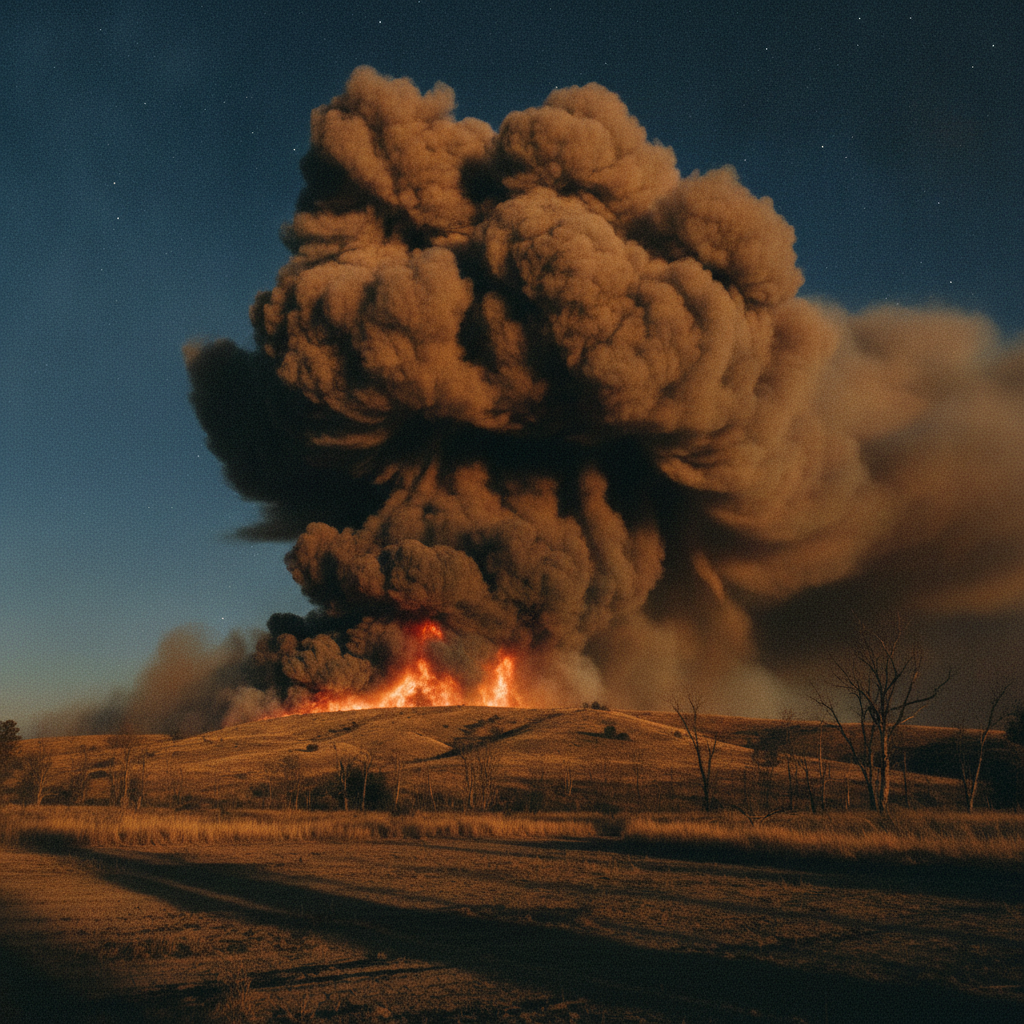
The headline finding is stark: average daily prenatal exposure to air pollution from human sources — cars, refineries, factories — dropped by 37 percent over the study period. [1] But contributions from wildfire smoke doubled, offsetting those gains. [1] Wildfire activity is, in the researchers' phrase, "systematically offsetting prenatal air quality gains" won by decades of regulation. [1]
The cruel geometry here is that the people most exposed are also the least equipped to absorb the consequences. A generation of hard-fought environmental progress turns out to have a ceiling — one made of smoke.
Low-income, rural, and Indigenous populations bore the disproportionate burden of wildfire's contribution to poor air quality, the authors found. [1] In the West and Northwest, wildfires' contributions to air pollution more than doubled over the study period. [1] And the communities where wildfires are responsible for the largest reversals in air quality — low-income, rural, and American Indian and Alaska Native populations — often have the least access to neonatal care. [1]
Prenatal exposure to wildfire smoke significantly increases the likelihood that babies will be born too early or too small, raising their risk of dying early or developing chronic respiratory conditions and other diseases later in life. [1]
Jaspers praised the study's methodological contribution: "What this study does do well is confirm and expand the well-established finding that ambient PM2.5 in the United States is increasingly wildfire-dominated, offsetting Clean Air Act gains, but applies a birth-weighted lens to it." [1] She added that wildfire smoke exposures are likely to have vast public health consequences. [1]
There is something almost perverse about the mechanism at work. The same industrial appetite that clean-air regulation spent decades taming is now feeding a secondary crisis — one that regulation alone cannot easily reach.
In 1965, a presidential advisory panel issued a report warning that pervasive chemical and carbon pollution was harming environmental health and changing the climate; five years later, President Richard Nixon signed the Clean Air Act. [1] Between 1990 and 2020, the EPA tracked dramatic declines in national average concentrations of harmful air pollutants: sulfur dioxide fell 91 percent, carbon monoxide 73 percent, and annual fine-particle PM2.5 concentrations dropped 41 percent from 2000 levels. [2] The regulatory architecture worked, on its own terms.
But climate change is now altering the terms. The unchecked burning of fossil fuels is creating warmer, drier conditions that make wildfires more intense and destructive, blanketing communities in toxic smoke that is more harmful than pollution from other sources. [2]
The University of Maryland study stops at 2019, constrained by available EPA datasets. [1] Senior author Michel Boudreaux, associate professor of health policy and management, noted that the last six years have seen several catastrophic fires in the West and Canada. [1] If the team were to extend the study through 2026, he said, they'd likely see wildfires make an even higher contribution to unhealthy prenatal exposures — though he was careful to flag that as speculation. [1]
The study does have acknowledged limits. It does not integrate outcome data on preterm birth or birthweight directly, nor does it account for whether mothers spent time outdoors, wore N95 masks, or ran air-filtration systems at home. [1] Boudreaux points to data from sources like Purple Air, which track wildfire smoke and are detecting a large amount of pollution in the form of PM2.5 inside people's homes — suggesting that staying indoors is far from a reliable shield. [1]
The conceptual shift this research demands is significant. For decades, reducing prenatal air-pollution exposure meant pressuring industry and transportation sectors. The new exposure frontier behaves differently — episodic, geographically vast, and shaped by forces that no single regulatory body controls.
Boudreaux frames the challenge as a two-track problem. [1] Longer term, he argues the upstream question cannot be avoided: "we should be asking, are there things we can do to reduce the risk of climate change in general?" [1]
Boudreaux's focus on prenatal exposure is deliberate. As he put it, the study zeroed in on a "very specific population that is quite at risk for adverse health outcomes" — infants and what their exposure was like during the prenatal period. [1] Since exposure to wildfire smoke early in life can cause lifelong health problems, reducing exposure in that window will yield long-term benefits that compound over decades. [1]
The Clean Air Act was never designed to fight a wildfire season. Half a century of regulatory engineering produced real, measurable gains — and smoke from a warming planet is now spending them down, one prenatal exposure day at a time. [1] The communities absorbing the most smoke are already the ones with the fewest resources to protect themselves. What that means, practically, is that the next phase of American air-quality policy cannot be written in the language of tailpipe standards and smokestack permits alone. [1]