Zenk Space Banks $26M for China's Next Orbital Debut
The Beijing startup's kerolox Zhihang-1 rocket is targeting June lift-off, with a novel engine-recovery twist already in the plan.
By The space-quantum Desk
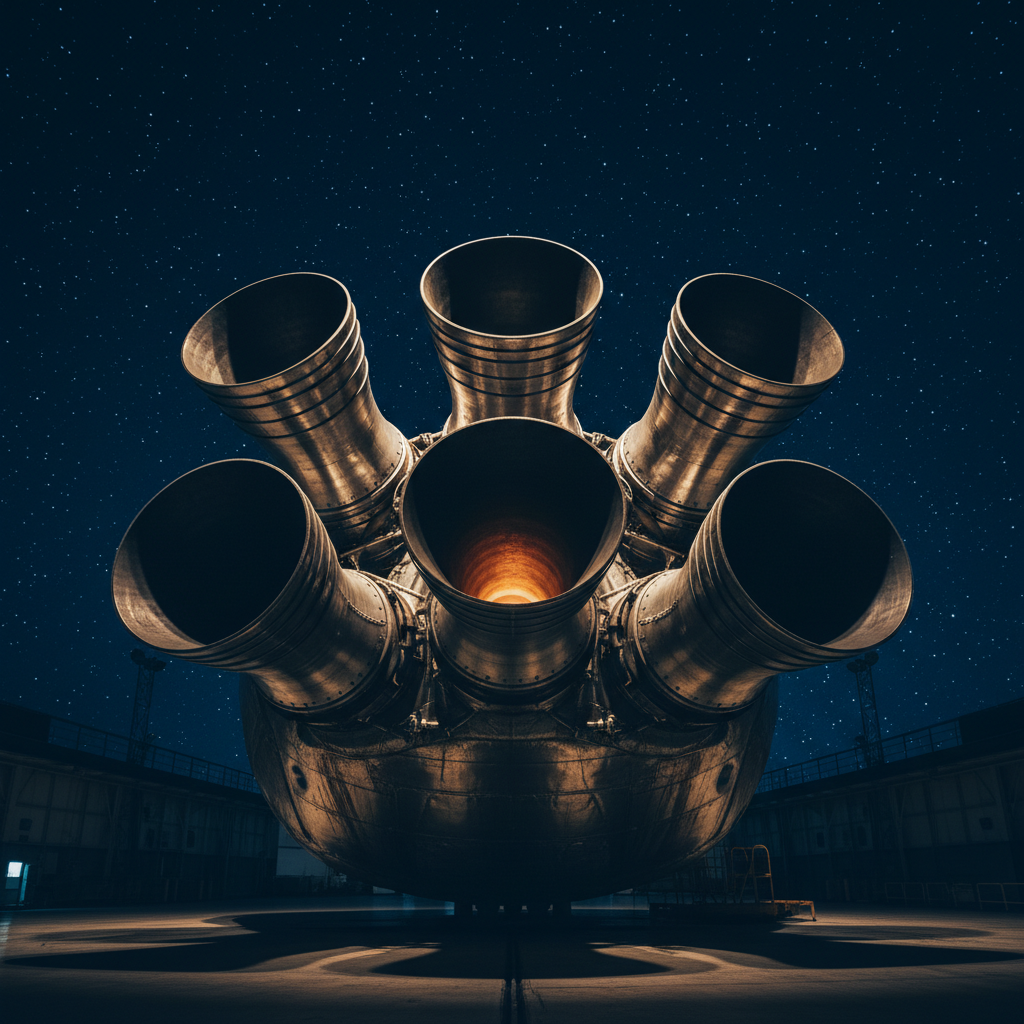
Zenk Space has raised 180 million yuan ($26 million) and set a June target for the first flight of its Zhihang-1 rocket — a 49.8-metre kerosene-liquid oxygen launcher capable of lifting 4,000 kilograms to a 500-kilometre Sun-synchronous orbit. [1]
The round was led by Wenzhou Bay New Area Investment Group, with Wenzhou Municipal State Investment Company, Eastern New City Group, city and district state-owned capital entities, and private investor Yarong Ventures also joining. [1] It is a textbook example of how Chinese launch startups are capitalized: provincial money funds the pad, national ambition supplies the mandate.
Zhihang-1 draws on off-the-shelf infrastructure: its YF-102 engines come from CASC's Academy of Aerospace Liquid Propulsion Technology — the same powerplant used in CAS Space's Kinetica-1 and Space Pioneer's Tianlong-2 — while propellant tanks are sourced from commercial firm R-Space. [1] The first stage passed a static fire test in February 2026 on the HOS-1 mobile sea platform off Shandong province. [1]
Rather than full stage recovery, Zenk is pursuing a more surgical approach: the first stage will not be recovered; instead, the engine bay section will separate from the first stage after second stage separation, thermal protection assists high-speed reentry through the atmosphere, before parachutes deploy to slow descent, with airbags for buoyancy after splashdown, so engines can be recovered, inspected, refurbished, and potentially integrated with a new first stage. [1] The company describes this as an incremental path to reusability, echoing the SMART recovery system studied by United Launch Alliance. [1]
What stands out is not the rocket itself but the model it represents — a deliberate, modular approach to reusability that sidesteps the heroics of full-stack recovery in favour of something more repairable and less risky.
A June launch would make Zhihang-1 one of the more closely watched debut flights of 2026 — not for its payload capacity, but for whether its engine pods come home in one piece. [1]
The engines can then be recovered, inspected and refurbished and potentially integrated with a new first stage.Zenk Space (via company presentation)